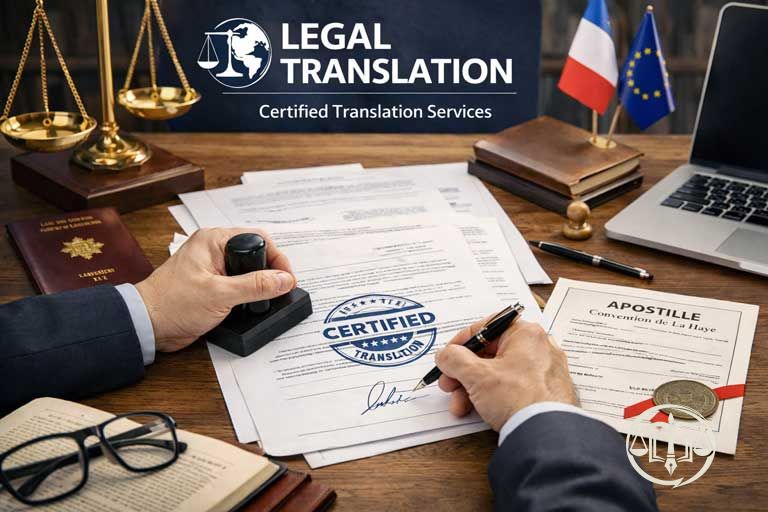
In an increasingly globalized world, administrative, legal, and academic procedures often require the translation of official documents. Diplomas, birth certificates, contracts, court decisions, and immigration documents all require a reliable, recognized, and legally valid translation. That is where a certified translator comes in.
But how do you choose the right professional? What is the difference between a certified translation and an apostille? Which criteria ensure the quality and validity of an official translation?
This complete guide explains everything you need to make the right choice and avoid costly mistakes.
What Is a Certified Translator?
A certified translator is a translator authorized by an official authority to certify that a translation is accurate and faithful to the original document.
This means:
- The translation has official validity
- It is recognized by public authorities and institutions
- It is accompanied by a stamp, signature, and official certification statement
Unlike a standard translation, a certified translation formally engages the translator’s responsibility.
Why Use a Certified Translator?
Some procedures specifically require a certified translation:
Most common cases:
- Immigration applications
- Marriage abroad
- Degree recognition
- Court proceedings
- Starting a business internationally
Without a certified translation, your documents may be rejected.
Certified Translation vs. Apostille: What’s the Difference?
This is a very common source of confusion.
Certified translation
- Prepared by an authorized translator
- Certifies the accuracy of the translated content
- Relates to the language and content
Apostille
- Certification issued by a competent administrative authority
- Authenticates the signature on an official document
- Relates to the origin of the document, not its content
👉 In short:
- Certified translation = linguistic certification
- Apostille = international administrative authentication
In some cases, you may need both.
Key Criteria for Choosing a Certified Translator
1. Verify the certification
The first criterion is, of course, official authorization.
A good translator should:
- Be officially authorized by a recognized authority
- Be able to provide proof of certification status
⚠️ Warning: many websites offer “certified translations” that have no real legal or official value.
2. Check the specialization
Not all certified translators specialize in the same fields:
- Legal (contracts, judgments)
- Administrative (records, certificates)
- Academic (diplomas, transcripts)
- Business (articles of incorporation, company documents)
👉 Choosing a translator experienced with your type of document is essential.
3. Review quality and compliance
A certified translation must be:
- Faithful to the original
- Complete, with no omissions
- Clear and well structured
- Compliant with administrative requirements
It should include:
- A statement such as “certified true and accurate translation of the original”
- Signature
- Translator’s stamp
- Date
4. Analyze turnaround times
Turnaround times can vary significantly:
- Urgent translation: 24 to 72 hours
- Standard translation: 3 to 7 days
A good provider should:
- Provide a clear deadline
- Honor its commitments
- Offer urgent options
5. Compare prices
The price of a certified translation depends on:
- The type of document
- The number of pages
- The language pair
- The urgency
💡 On average: starting from €20 per page
⚠️ Be cautious with prices that are too low or too high:
- Too low = risk of poor quality
- Too high = unjustified cost
Mistakes to Avoid
❌ Choosing based only on price
Quality and official validity should come first.
❌ Failing to verify certification
Some translations may be rejected by public authorities or institutions.
❌ Using too many intermediaries
This can lead to:
- Longer turnaround times
- Errors
- Higher prices
❌ Overlooking confidentiality
Your documents are often sensitive and may contain personal, financial, or legal information.
Why a Reliable Online Translation Platform Matters
Today, many platforms let you order a certified translation online.
But not all of them offer the same level of reliability.
A reliable platform should offer:
- Direct contact with the translator
- Real-time request tracking
- A secure client area
- Full transparency on pricing and deadlines
Why Choose a Platform Like Legal Translation?
Legal Translation stands out with a modern, secure, and transparent approach to certified translation.
1. Direct contact with the translator
Unlike many competitors:
- No intermediaries
- No subcontractors
- Direct communication with the professional
👉 Result: better quality, fewer errors, and more competitive pricing
2. Affordable and transparent pricing
- Certified translation starting from €20 per page
- Clear pricing
- No hidden fees
3. A 100% online platform
- Fast ordering
- Secure document upload
- Online payment
4. A complete client area
Each user benefits from a personal account that allows:
- Real-time request tracking
- Access to invoices
- Profile management
- Messaging with the translator
- Order history
5. Maximum confidentiality
Data security is a priority:
- Documents are not shared with third parties
- Secure storage
- Guaranteed data integrity
👉 Your documents remain strictly confidential
6. Fast turnaround
Thanks to an efficient digital workflow:
- Shorter deadlines
- Fast processing for urgent requests
- Reliable delivery
7. Compliant and certified translation
Each translation provided is:
- Faithful to the original
- Certified by an authorized translator
- Accepted by public authorities and institutions
8. Full transparency
Legal Translation is committed to providing:
- Clear information
- Detailed tracking
- Smooth communication
How Does an Online Certified Translation Work?
Simple steps:
- Upload your document
- Analysis and instant quote
- Validation and payment
- Translation by a certified expert
- Delivery of the certified document
When Do You Also Need an Apostille?
You may need an apostille if:
- The document is intended for use in another country
- That country requires international authentication
Example:
- A French diploma used abroad
- A birth certificate for an international marriage
👉 The apostille certifies the authenticity of the original document
👉 The certified translation certifies its translated content
Conclusion
Choosing a certified translator should never be taken lightly. It is an essential legal service that can directly affect your administrative, academic, or professional procedures.
To make the right choice, prioritize:
- Official certification
- Relevant expertise
- Transparent pricing
- Data security
- Fast turnaround
Modern platforms like Legal Translation now offer a reliable, accessible, and secure way to obtain high-quality certified translations while simplifying the entire process.
👉 By choosing the right partner, you save time, gain peace of mind, and ensure that your documents are accepted without difficulty.
Do you have a question?
Which documents require a certified translation?
The most common documents include:
- Birth, marriage, and death certificates
- Diplomas and academic transcripts
- Judgments and legal documents
- Contracts
- Administrative documents
Why choose a digital solution like Legal Translation?
A modern platform offers:
- Direct access to translators
- Competitive pricing (from €20 per page)
- Complete online management
- Enhanced confidentiality
- Faster processing
👉 Today, it is one of the most effective ways to obtain a reliable and fast certified translation.
What is a certified translation?
A certified translation is an official translation carried out by a translator approved by a judicial authority. It is certified as true to the original and has legal value before administrations, courts, and institutions.
Why are some prices higher than others?
Price differences can be explained by several factors:
- The presence of intermediaries
- The rarity of certain languages
- The level of specialization required
- Urgent turnaround times
👉 A platform without intermediaries can often reduce costs.
When is a certified translation required?
A certified translation is required in many situations, including:
- Immigration procedures
- Marriage abroad
- University enrollment
- Judicial proceedings
- International company formation
How much does a certified translation cost?
The price depends on several factors:
- Number of pages
- Source and target languages
- Document complexity
- Requested turnaround time
💡 In general, prices start from €20 per page on competitive platforms.
Can I order a certified translation online?
Yes, today you can order a certified translation 100% online through our specialized platform.
Benefits include:
- Speed
- Simplicity
- Real-time tracking
- Access to certified translators
When is an apostille required in addition to the translation?
An apostille is required when the document must be recognized abroad, especially in countries that are signatories to the Hague Convention.
👉 Example: a French birth certificate used in another country.
What is the difference between a certified translation and an apostille?
- Certified translation: certifies that the translation is faithful to the original
- Apostille: certifies the authenticity of the original document, including the signature and stamp
👉 Both may be required for international procedures.
Is a certified translation valid in all countries?
Not always. Some countries may require:
- An apostille
- Additional legalization
- A translation performed locally
👉 It is recommended to check the requirements of the destination country.
How can I verify that a translator is sworn?
You can:
- Check whether they are registered with a Court of Appeal
- Ask for proof of their sworn status
- Verify the official mentions on the translated document, such as the stamp and signature
What is the difference between a sworn translation and a certified translation?
In practice, these terms are sometimes used as synonyms. However:
- Sworn translation: performed by a translator officially recognized by a court and carrying strong legal value
- Certified translation: a broader term that may be used without a strict legal framework depending on the country
👉 It is therefore essential to make sure the translation is carried out by an official sworn translator when legal acceptance is required.
